The Estate
A house that has learned
to keep its own counsel.
History
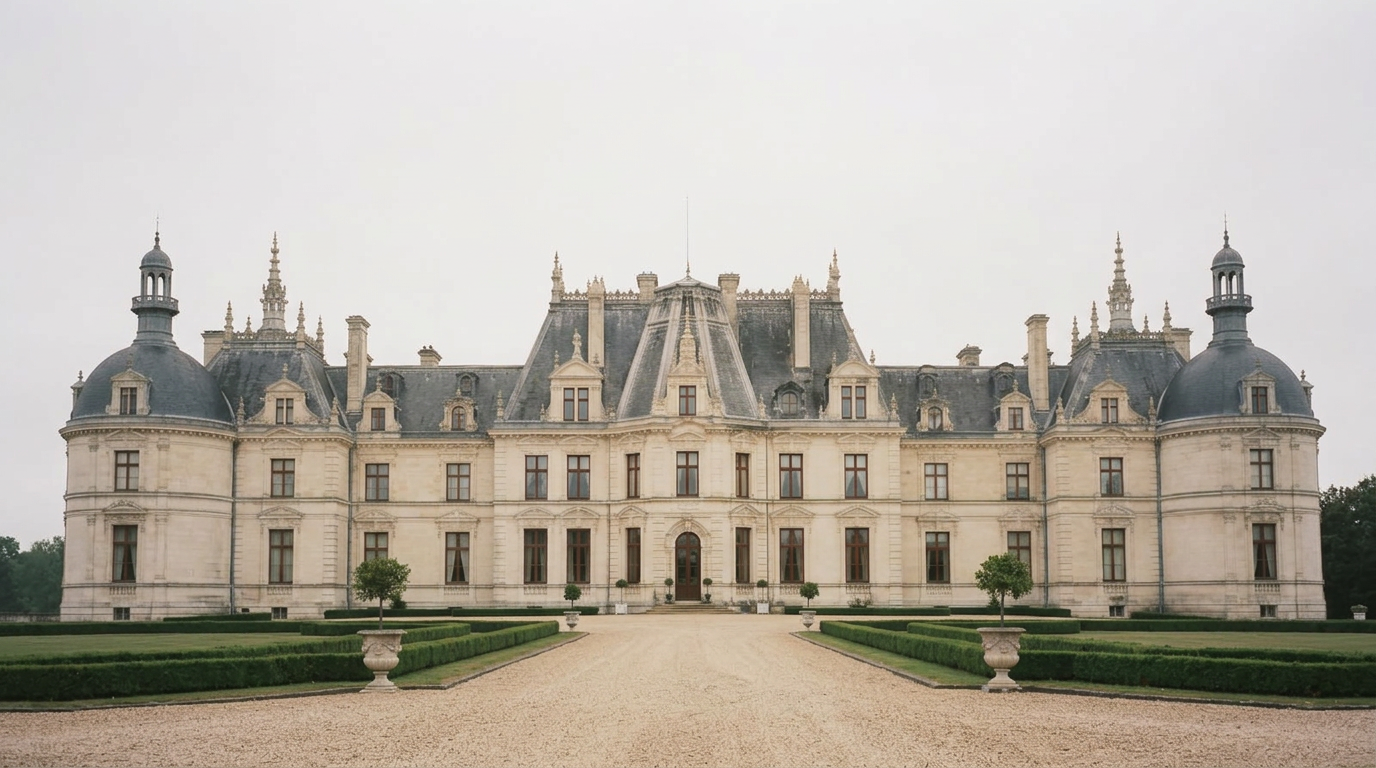
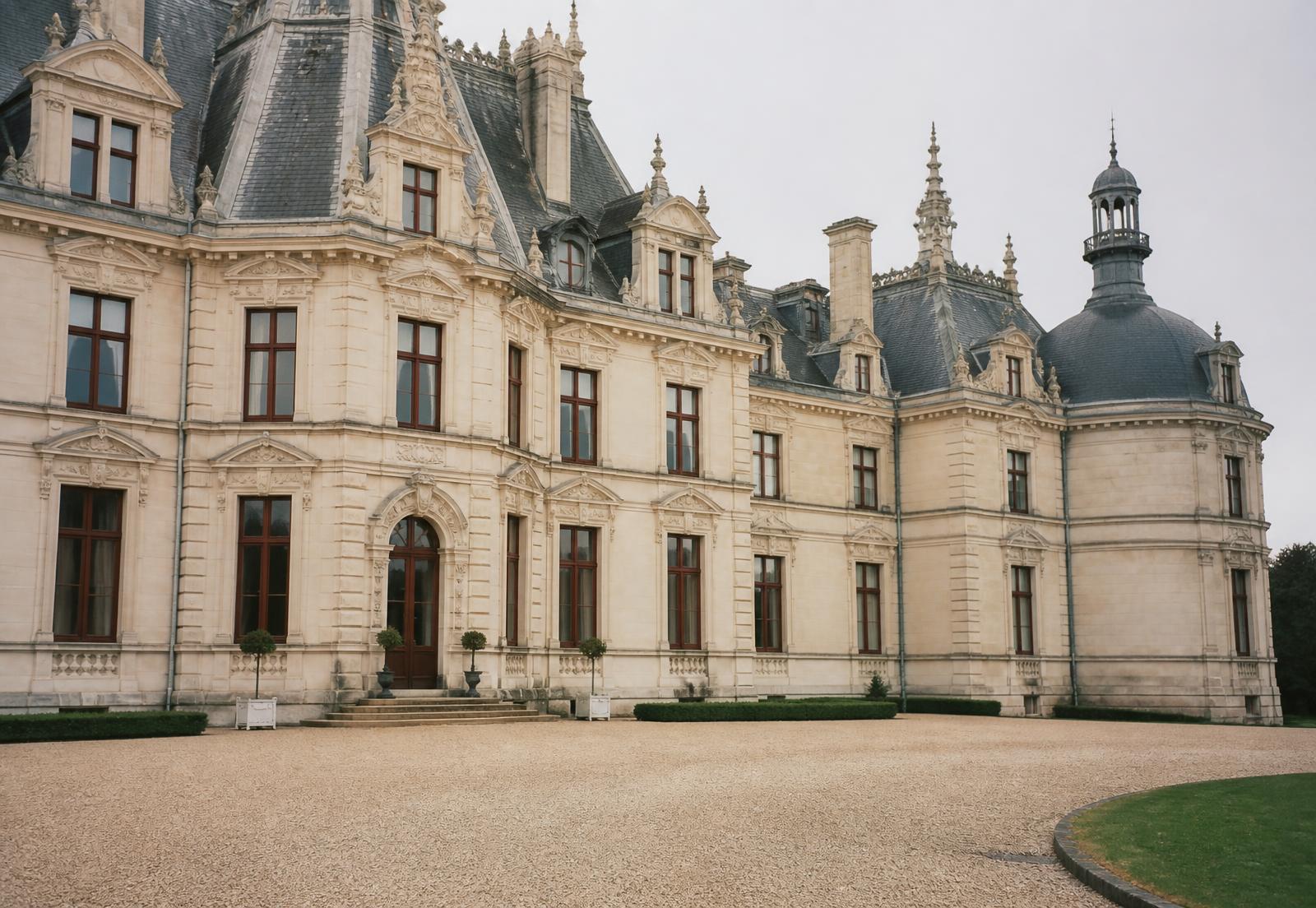
Raised in the late fifteenth century as a private hunting lodge, enlarged two hundred years later by a counsellor to the French court, and — over the last decade — quietly returned to itself, one room and one stone at a time.
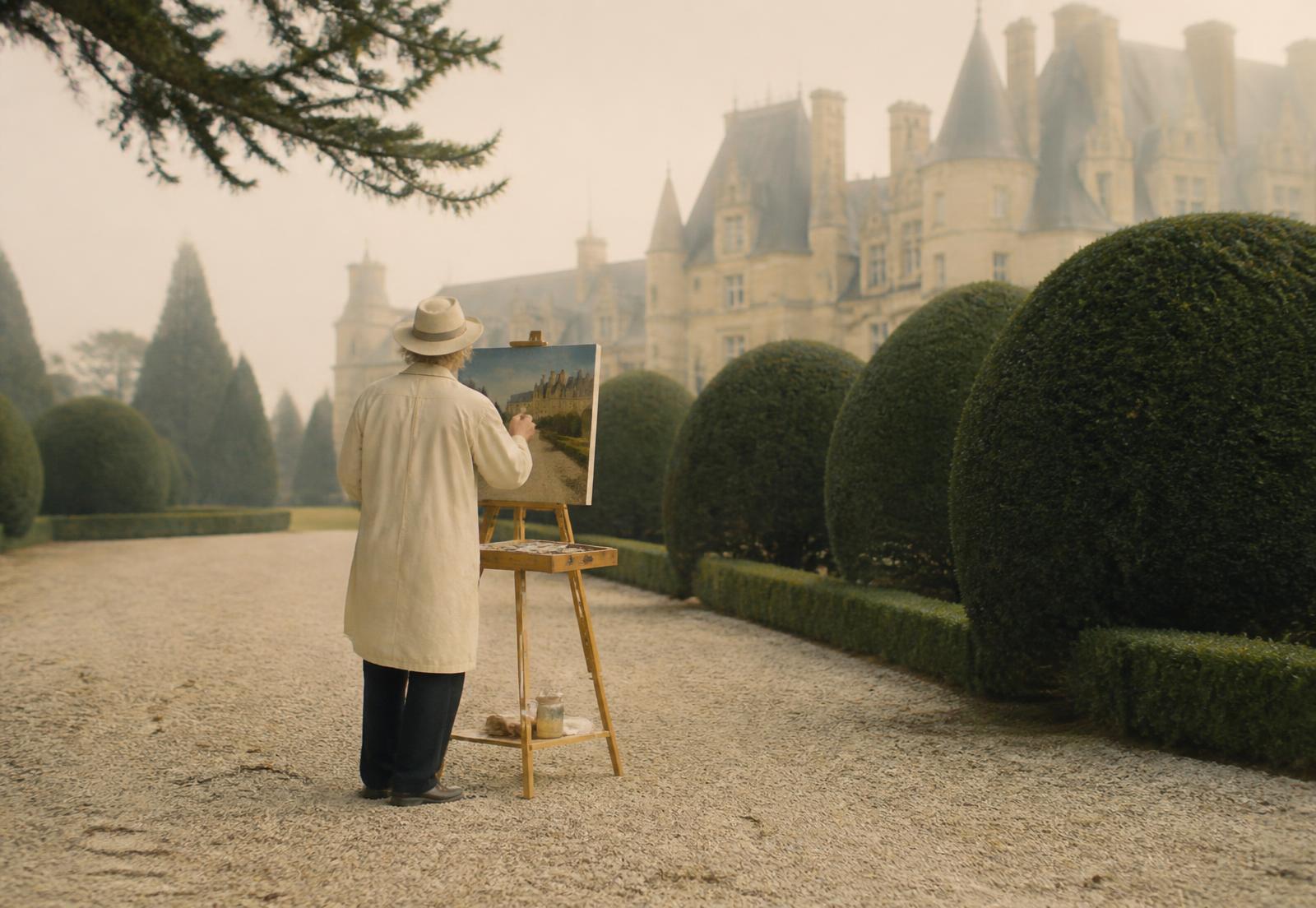
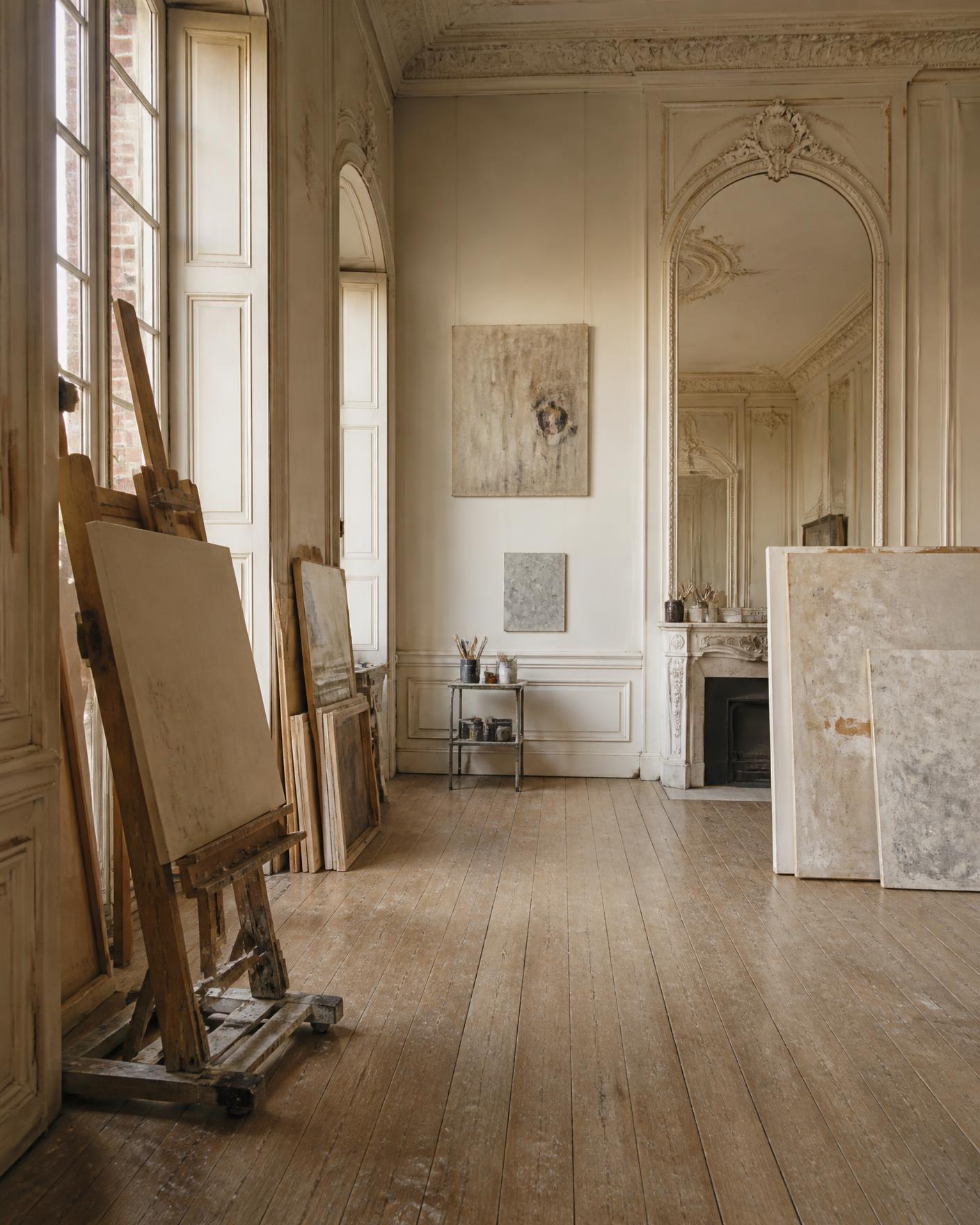
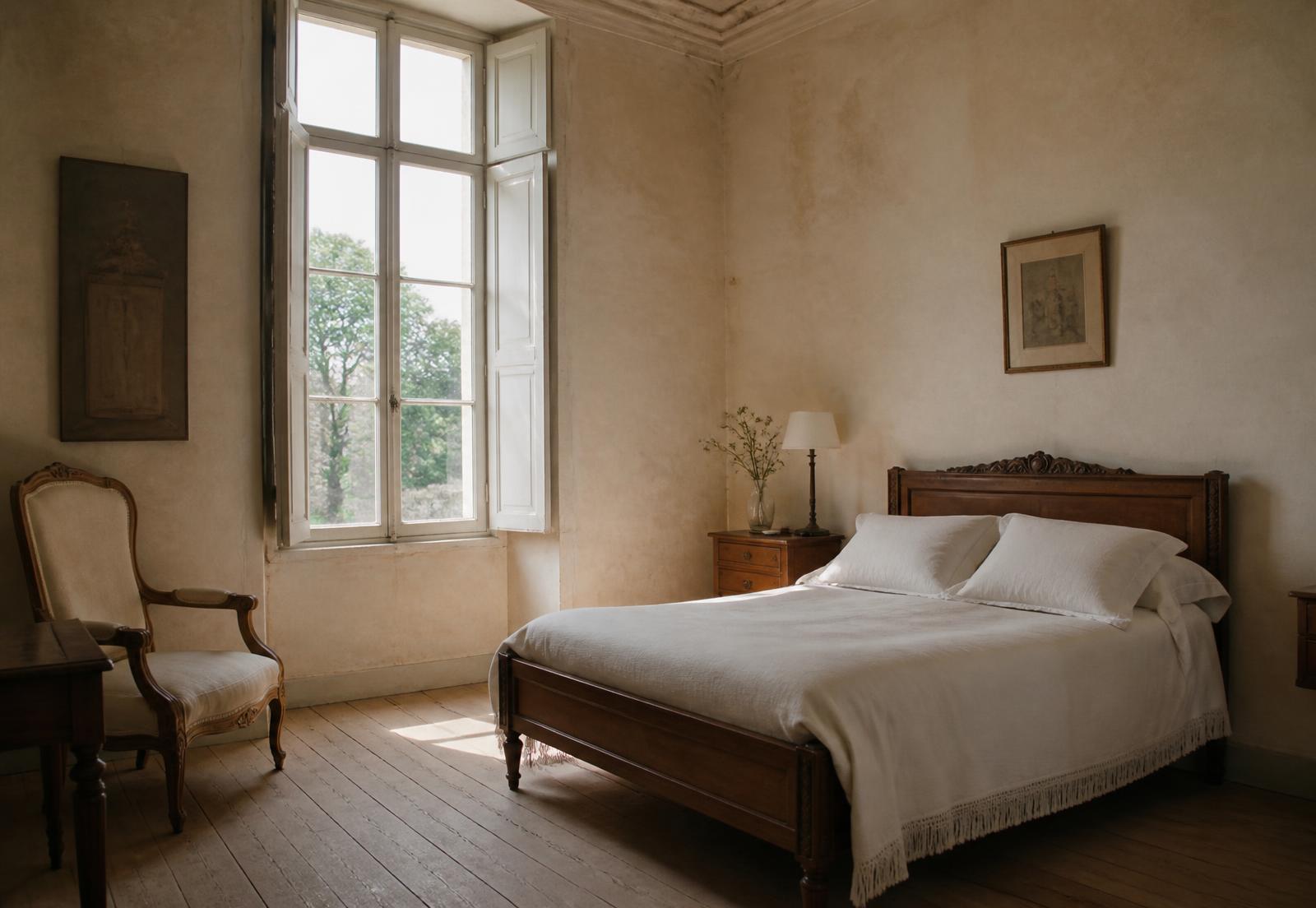
The bones have not moved: the enfilade opening room into room, the parquet de Versailles, the vaulted kitchen, the orangery, the wine cellar cut directly into the tuffeau rock. What has changed is the reason for opening the shutters each morning. This is the château's next chapter, and it belongs to artists.
Architecture
Rooms that carry sound differently.
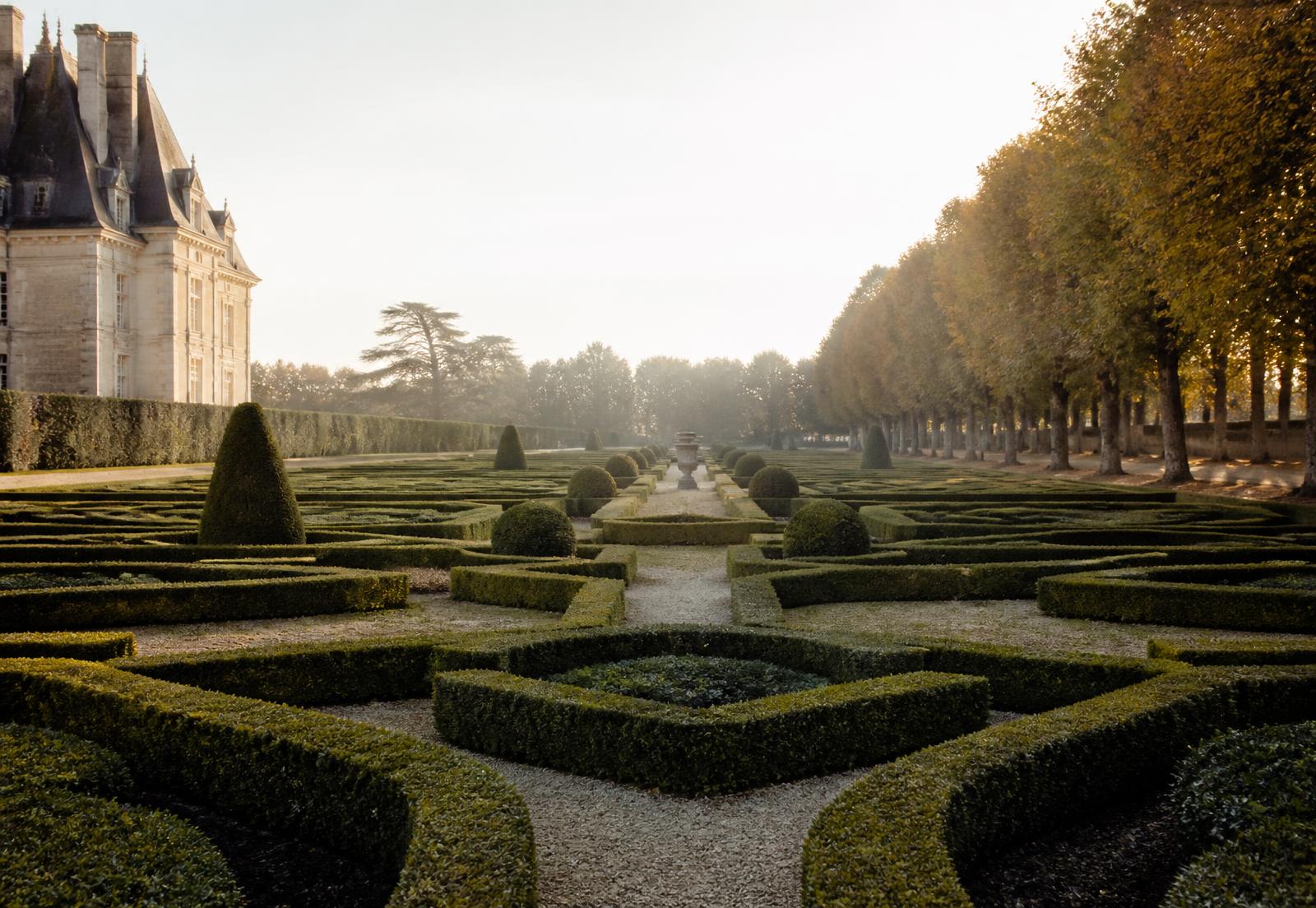
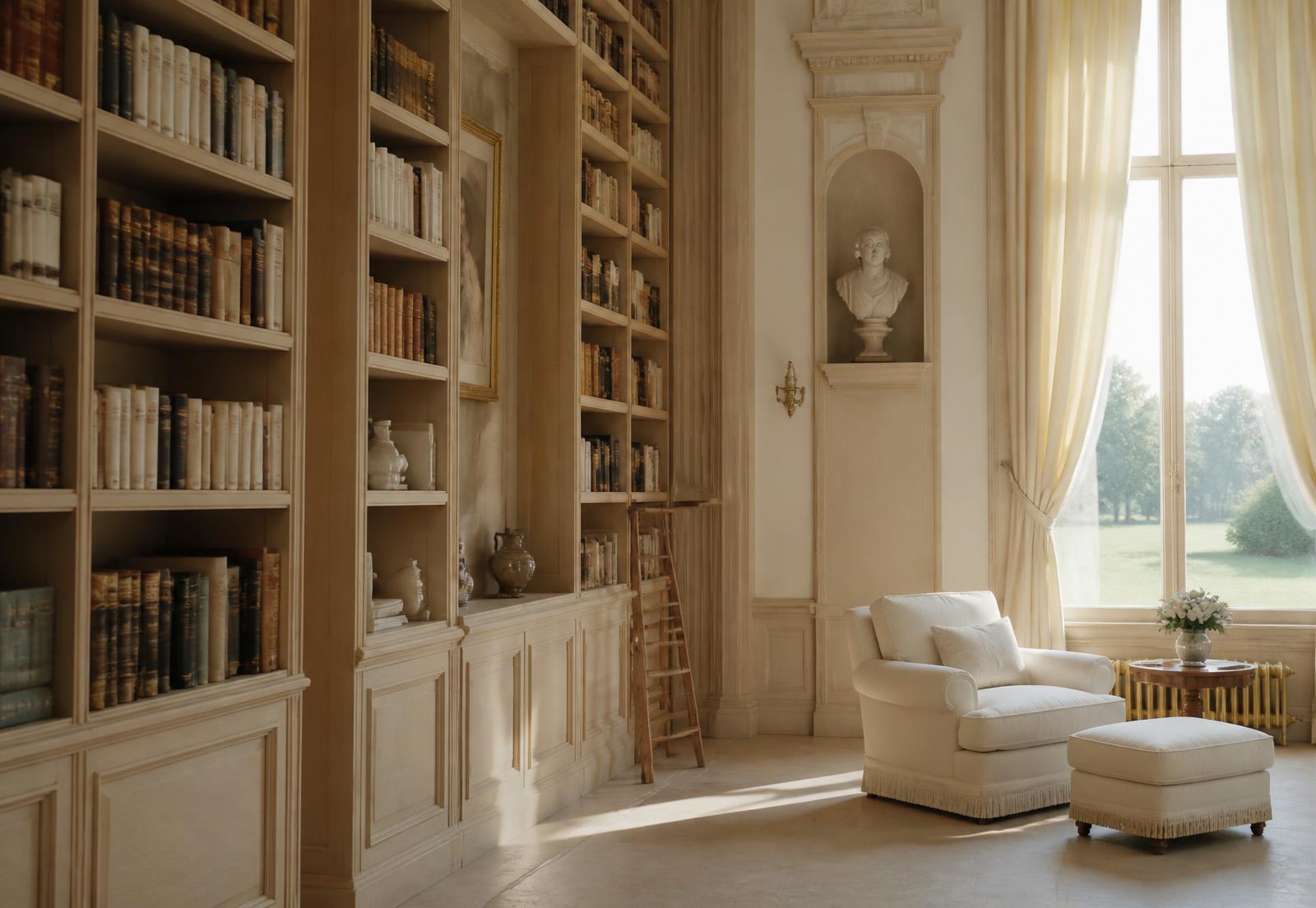
Doors nearly three metres tall. Walls thick enough to hold the day's heat until midnight. Restoration was entrusted to a Paris atelier specialising in monuments historiques, working in patient dialogue with contemporary designers — nothing added that could not have belonged.
The table
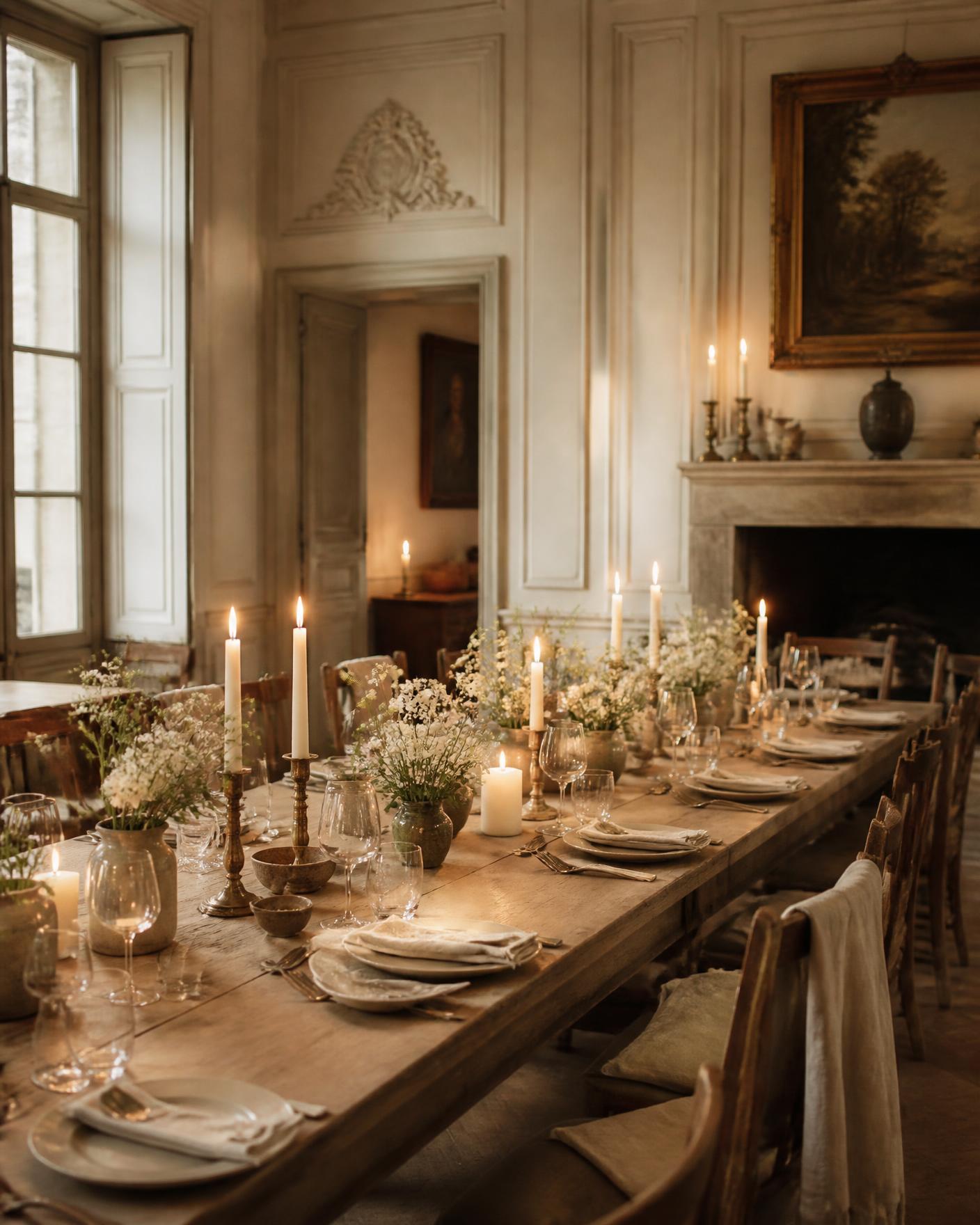
A house that still eats together.
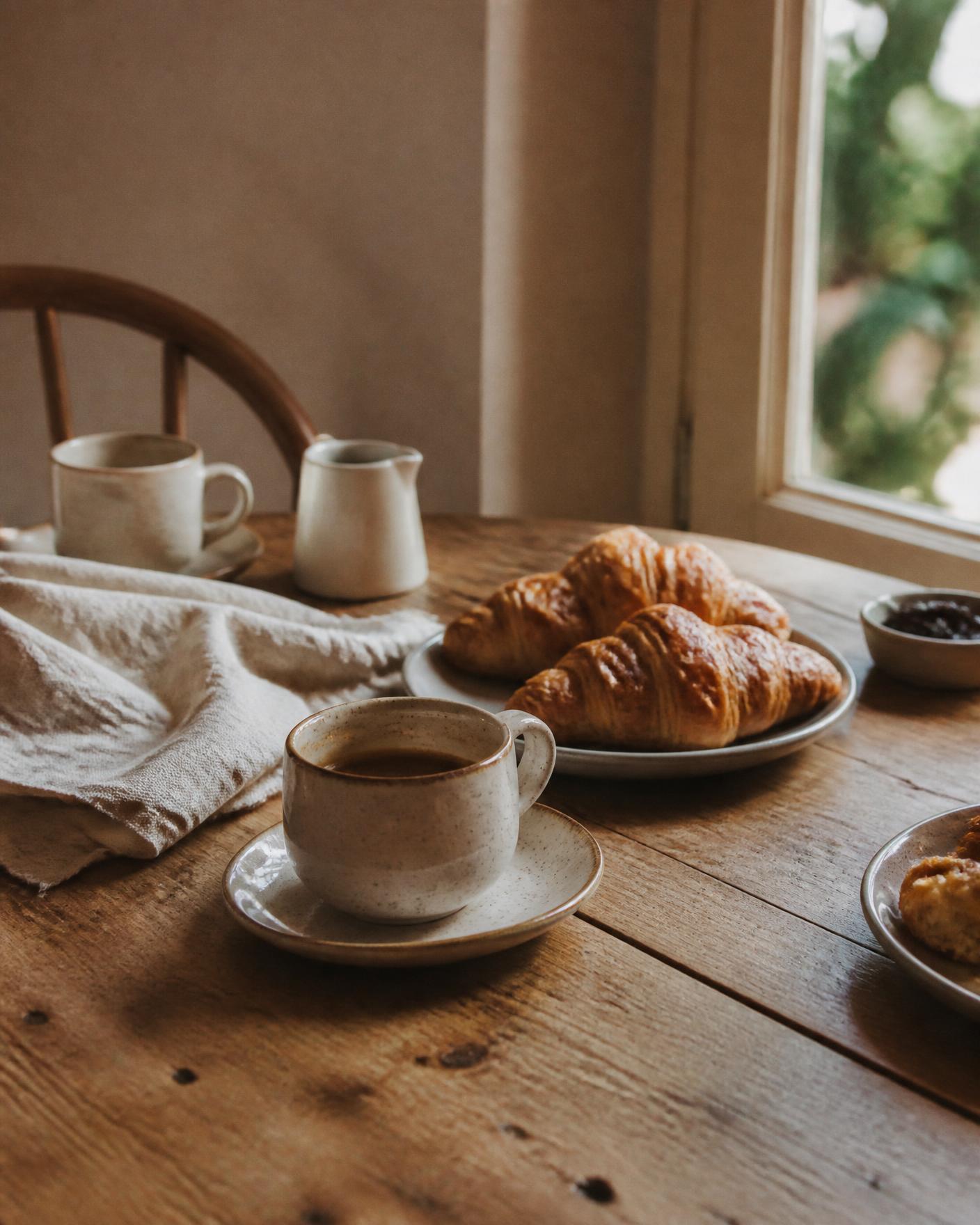
A resident chef cooks with what the potager offers first, the local market second, and the neighbouring domaines whenever the moment calls for it. Dinners are long, seated, unbroken by phones — the hour of the day the château seems to have been built for.